Hot water in your Kampala home or business shouldn’t depend on Umeme. But for most properties still running an electric geyser, it does.
Here’s the problem. An electric geyser is one of the biggest electricity consumers in any building. It runs continuously to keep water hot — and the moment the power goes off, your hot water supply goes with it. At UGX 756 per unit and rising every quarter, the cost of heating water electrically adds up fast.
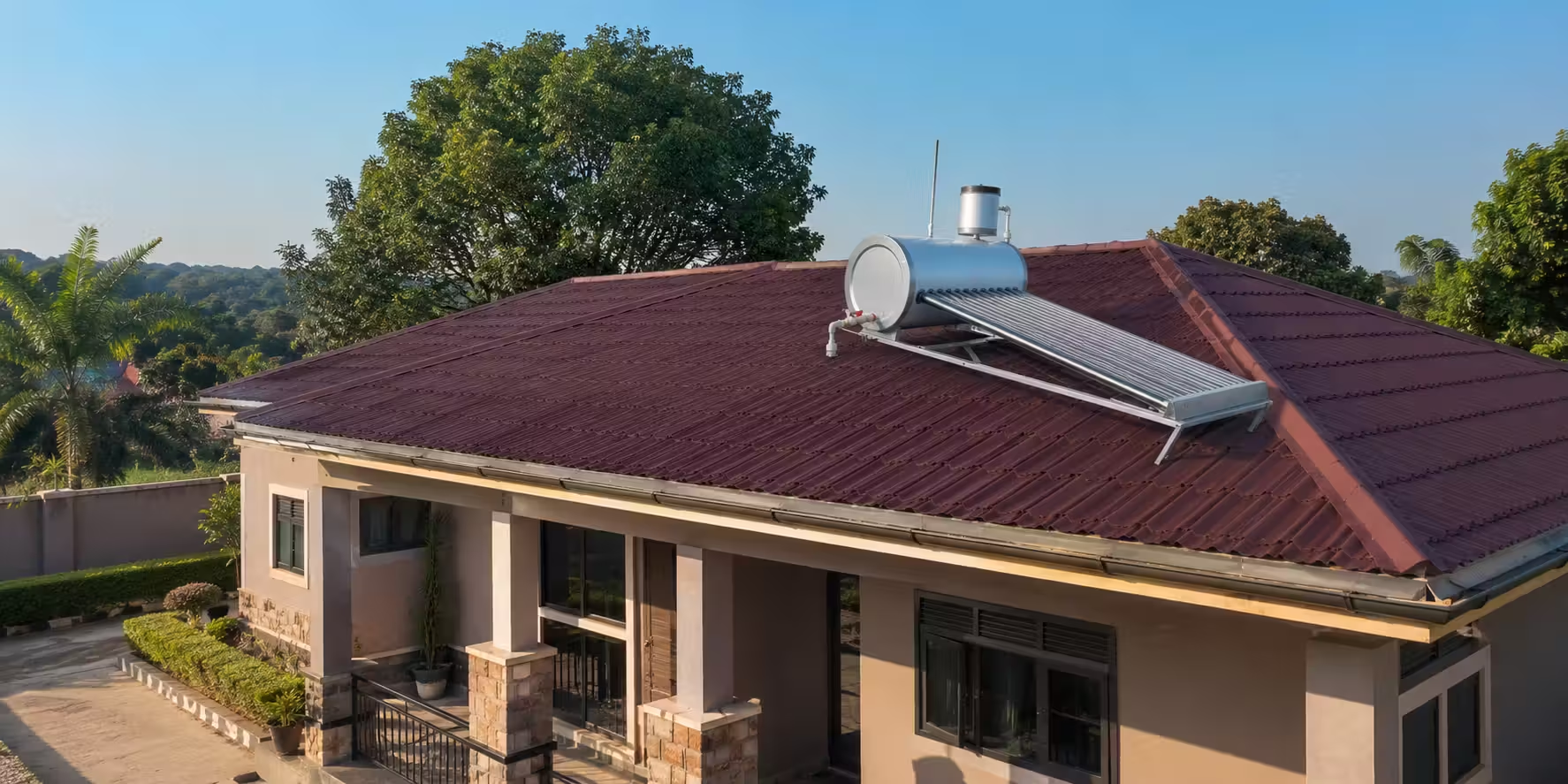
A solar water heater solves both problems at once. It uses sunlight — not electricity — to heat your water. And it stores that hot water in a well-insulated tank so it stays warm through the night and through every outage.
In this guide, we cover how solar water heaters work, the real advantages for Kampala homes and businesses, what they cost in Uganda, and exactly what to expect from installation. By the end, you’ll know whether a solar water heater is the right move — and which size fits your property.
How Does a Solar Water Heater Work?
From Sunlight to Hot Water — the Simple Version
A solar water heater has two main parts: a solar collector and an insulated storage tank.
The collector sits on your roof and absorbs heat from the sun. That heat transfers to water running through the system. The heated water then moves into the storage tank, where it stays hot — often for 24 to 48 hours — until you need it.
No electricity. No fuel. Just sunlight doing the work.
The system runs automatically throughout the day. As long as the sun is shining, your tank is being topped up with hot water. By evening, you have a full tank ready for showers, cooking, or laundry — without touching your electricity budget.
Two Types of Solar Water Heaters Available in Uganda
Not all solar water heaters work the same way. Two main types are installed across Uganda — and they suit different properties and budgets.
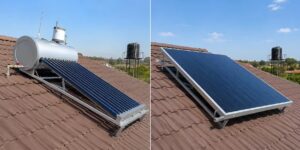
Evacuated tube collectors use a series of glass vacuum tubes to trap solar heat with maximum efficiency. They perform well even on overcast days and are the recommended choice for larger homes, hotels, and commercial properties.
Flat plate collectors use a flat panel to absorb sunlight and are a reliable, cost-effective option for smaller households with consistent hot water needs.
Not sure which type suits your property? Our guide to evacuated tube and flat plate solar water heaters breaks down the differences in detail.
Key Advantages of a Solar Water Heater in Kampala
Lower Electricity Bills — Up to 40% Monthly Savings
An electric geyser can account for 30 to 40% of a home’s entire monthly electricity bill. Switch to solar water heating and that cost drops to almost zero.
Once installed, a solar water heater uses no electricity to heat your water. Ugandan households can reduce their electricity bills by up to 40% simply by replacing an electric geyser with a solar system. Over a full year, that’s a significant saving — and the system keeps delivering those savings for 20 or more years.
Hot Water 24/7 — Even During Power Outages

This is the advantage that matters most in Kampala.
When Umeme goes off, electric geysers stop. Your hot water stops with them. With a solar water heater, that doesn’t happen. The insulated tank retains heat for 24 to 48 hours — meaning your shower is hot whether the power is on or not.
This is exactly why hotels and resorts across Uganda are switching to solar water heating. Speranza Hotel in Entebbe, Grace Lakes and Resort in Muduuma, and Oguzulu Resort Beach and Campsite have all installed solar water heating systems with Easy Power — because when guests check in expecting a hot shower, depending on Umeme is simply not an option.
Long Lifespan and Low Maintenance
Solar water heaters are built to last. A quality system installed correctly will serve your home or business for 20 to 25 years with very little intervention.
Maintenance is straightforward: occasional cleaning of the collector panels to remove dust and debris, and a periodic check of connections and the storage tank. Easy Power includes maintenance support with every installation — and our solar water heater maintenance guide covers everything you need to keep your system running at full performance year-round.
Cleaner Energy for Your Home or Business
Every litre of water heated by the sun is a litre that didn’t need electricity or fuel to produce. Solar water heaters generate zero emissions during operation — a cleaner choice for any home or business that wants to reduce its environmental impact while cutting costs at the same time.
Key Advantages of a Solar Water Heater in Kampala
Let’s be honest about the comparison.
| Factor | Solar Water Heater | Electric Geyser |
|---|---|---|
| Monthly running cost | Near zero after installation | UGX 756/unit — ongoing and rising |
| Reliability during outages | Full — tank stays hot 24–48 hrs | None — stops with the power |
| Upfront cost | UGX 1.5M–3.6M fully installed | Lower upfront |
| Lifespan | 20–25 years | 8–12 years |
| Maintenance | Low — clean panels periodically | Moderate — element replacements |
| Long-term cost | Very low | Continuously rising |
| Environmental impact | Zero emissions | Grid-dependent |
The electric geyser wins on upfront cost only. On every other measure — running cost, reliability during outages, lifespan, and long-term value — the solar water heater comes out ahead. And with UEDCL tariffs reviewed every quarter, the gap gets wider every year.
How Much Does a Solar Water Heater Cost in Uganda?
The honest answer: it depends on the system type and size you need.
All Easy Power solar water heater prices include full installation, accessories, and labour — no hidden costs. And right now, you can get up to 3% discount on any system this rainy season.
Non-Pressurized Systems (for simple homes on tank or gravity water)
| Size | Price | Capacity |
|---|---|---|
| 120 litres | UGX 2,100,000 | Up to 5 users |
| 240 litres | UGX 3,200,000 | Up to 15 users |
| 320 litres | UGX 4,400,000 | Up to 20 users |
Pressurized Systems (for modern homes with pump water supply)
| Size | Price | Capacity |
|---|---|---|
| 150 litres | UGX 3,000,000 | Up to 5 users |
| 200 litres | UGX 4,200,000 | Up to 8 users |
| 300 litres | UGX 5,200,000 | Up to 12 users |
PV Pressurized Systems (for modern homes and hotels — premium)
| Size | Price |
|---|---|
| 100 litres | UGX 2,800,000 |
| 200 litres | UGX 4,800,000 |
| 300 litres | UGX 6,800,000 |
PV Pressurized systems come with a heating element and controller included for guaranteed hot water in all weather conditions. Optional upgrades: additional heating element at UGX 150,000 or controller at UGX 350,000.
For the full breakdown of what each system includes, visit our solar water heater prices in Uganda.
What about return on investment? Most systems recover their installation cost within 2 to 4 years through electricity savings — then deliver free hot water for 20+ years after that. The higher your current electricity bill from running a geyser, the faster the payback.
How to Choose the Right Solar Water Heater for Your Kampala Home
Step 1 — How Many People Are in Your Household?
Sizing correctly from the start makes the biggest difference to performance and payback. Use this as your guide:
| Household Size | Recommended System |
|---|---|
| Up to 5 people | 120L Non-Pressurized or 150L Pressurized |
| 6–8 people | 200L Pressurized |
| 9–12 people | 300L Pressurized |
| 13–15 people | 240L Non-Pressurized |
| 16–20 people / hotels & resorts | 320L Non-Pressurized or 300L PV Pressurized |
For more guidance on getting the most from your solar water heater, sizing correctly from day one makes the biggest difference.
Step 2 — Which System Type Suits Your Property?
The right system depends entirely on your water supply setup:
- On tank or gravity water? Go with a Non-Pressurized system — simpler to install, reliable, and the most cost-effective entry point.
- On a pump system? A Pressurized system gives you stronger flow and better performance suited to modern homes.
- Running a hotel, resort, or high-demand property? The PV Pressurized system is built for you — it comes with a heating element and controller so hot water is guaranteed regardless of weather or grid availability.
Step 3 — Match Your Budget to Your Payback Period
Every system Easy Power installs pays itself back through electricity savings. The right system isn’t the most expensive one — it’s the one that matches your daily hot water use and recovers its cost the fastest. Easy Power’s team will confirm the best option for your property during your free site assessment.
How Solar Water Heater Installation Works in Kampala
Going solar for your hot water is simpler than most people expect. Here’s exactly what the process looks like with Easy Power.
Step 1 — Free Site Assessment
A technician visits your property to assess your roof, available space, water supply type, and daily hot water usage. This determines the right system type and size for your specific setup.
Step 2 — System Recommendation and Quote
Based on the assessment, Easy Power recommends the right system and provides a clear quote: size, system type, installation cost, and projected monthly savings. No pressure, no guesswork.
Step 3 — Installation Day
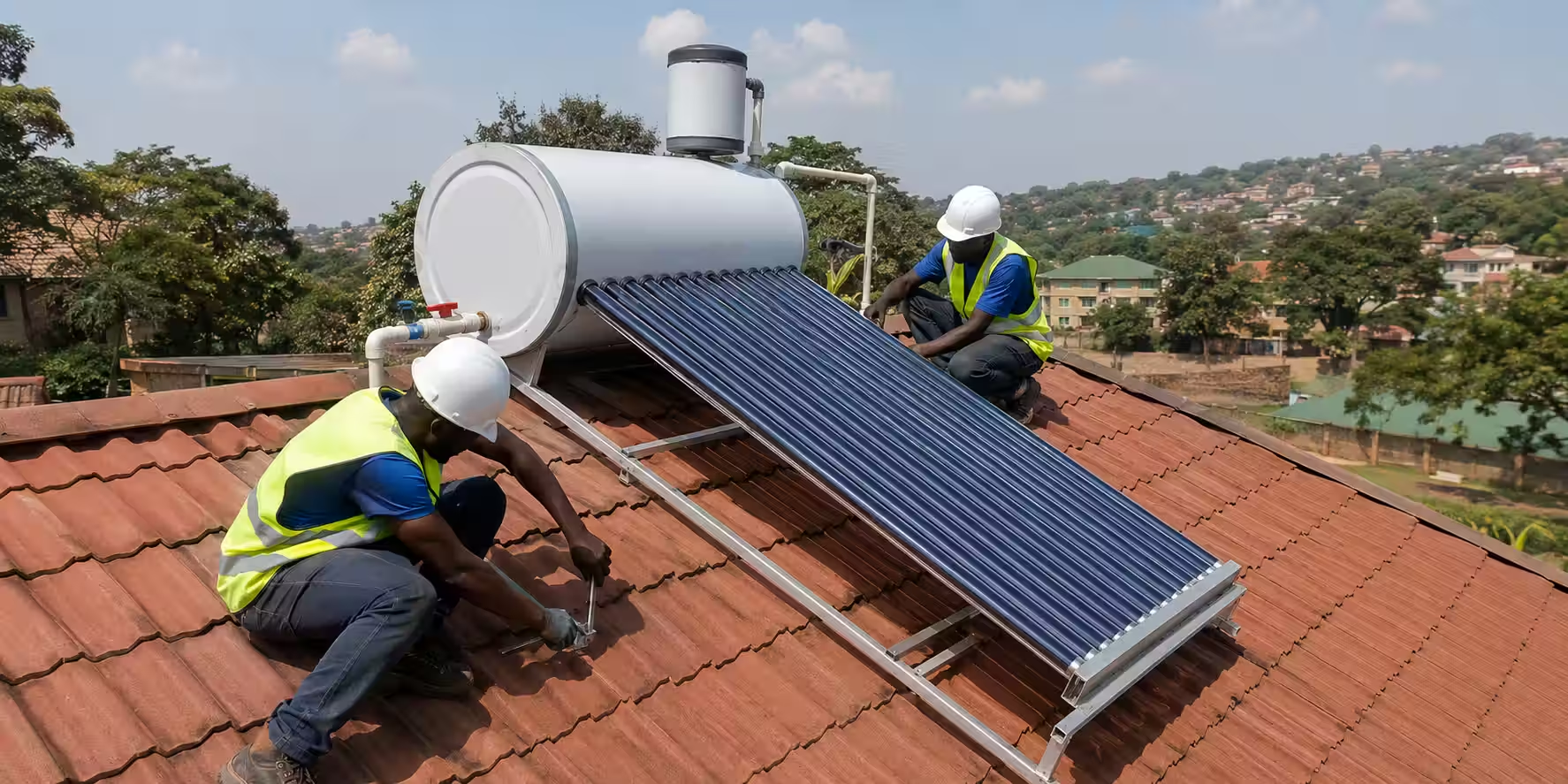
For most residential installations, the physical work takes one day. The collector is mounted on the roof, the storage tank is connected to your existing water supply, and all connections are sealed, insulated, and tested properly.
Step 4 — Testing and Handover
Before the team leaves, the full system is tested under real conditions. You receive a complete walkthrough, warranty documentation, and a maintenance schedule. Our full range of solar water heaters in Uganda is available if you’d like to explore options before booking your assessment.
How Solar Water Heater Installation Works in Kampala
Yes. The solar collector heats water during the day and stores it in a well-insulated tank that retains heat for 24 to 48 hours. Your water stays hot through the night and into the following morning — even without any further sun exposure. You shower at midnight or 5am — the hot water is there.
A PV Pressurized system is the premium tier — designed for modern homes and hospitality properties that need guaranteed hot water at all times. It includes a heating element and controller, meaning it can supplement solar heating when sunlight is limited. It is the system Easy Power installs in hotels and resorts across Uganda, including Speranza Hotel in Entebbe and Grace Lakes and Resort in Muduuma.
A quality system installed correctly lasts 20 to 25 years. The collector panels and insulated storage tank are built for outdoor conditions. Routine cleaning every few months is all most systems need to maintain full performance.
Use this as a starting point: 120L or 150L for up to 5 people, 200L for 6–8 people, 300L for 9–12 people, and 320L or 300L PV Pressurized for larger households, hotels, or resorts. Easy Power’s team will confirm the exact right size during your free site assessment.
The solar water heater is significantly cheaper over its lifetime. The electric geyser costs less upfront but keeps billing you every month at tariff rates that rise every quarter. The solar system is a one-time installation cost with near-zero running expenses for 20+ years.
Ready to Stop Paying for Hot Water Every Month?
A solar water heater in Kampala is one of the most practical and highest-returning upgrades you can make to your home or business.
Lower bills. Reliable hot water through every outage. A system that lasts 20+ years with minimal upkeep.
Hotels like Speranza in Entebbe, resorts like Grace Lakes in Muduuma, and homes across Uganda are already making the switch. And right now, Easy Power is offering up to 3% discount on all solar water heater systems — fully installed.
Contact the Easy Power team today for a free site assessment. We’ll recommend the right system for your property and give you a clear, honest quote — no obligation, no pressure.
📞 +256 392 001 947 | WhatsApp +256 789 931 735 | info@easypowerug.com