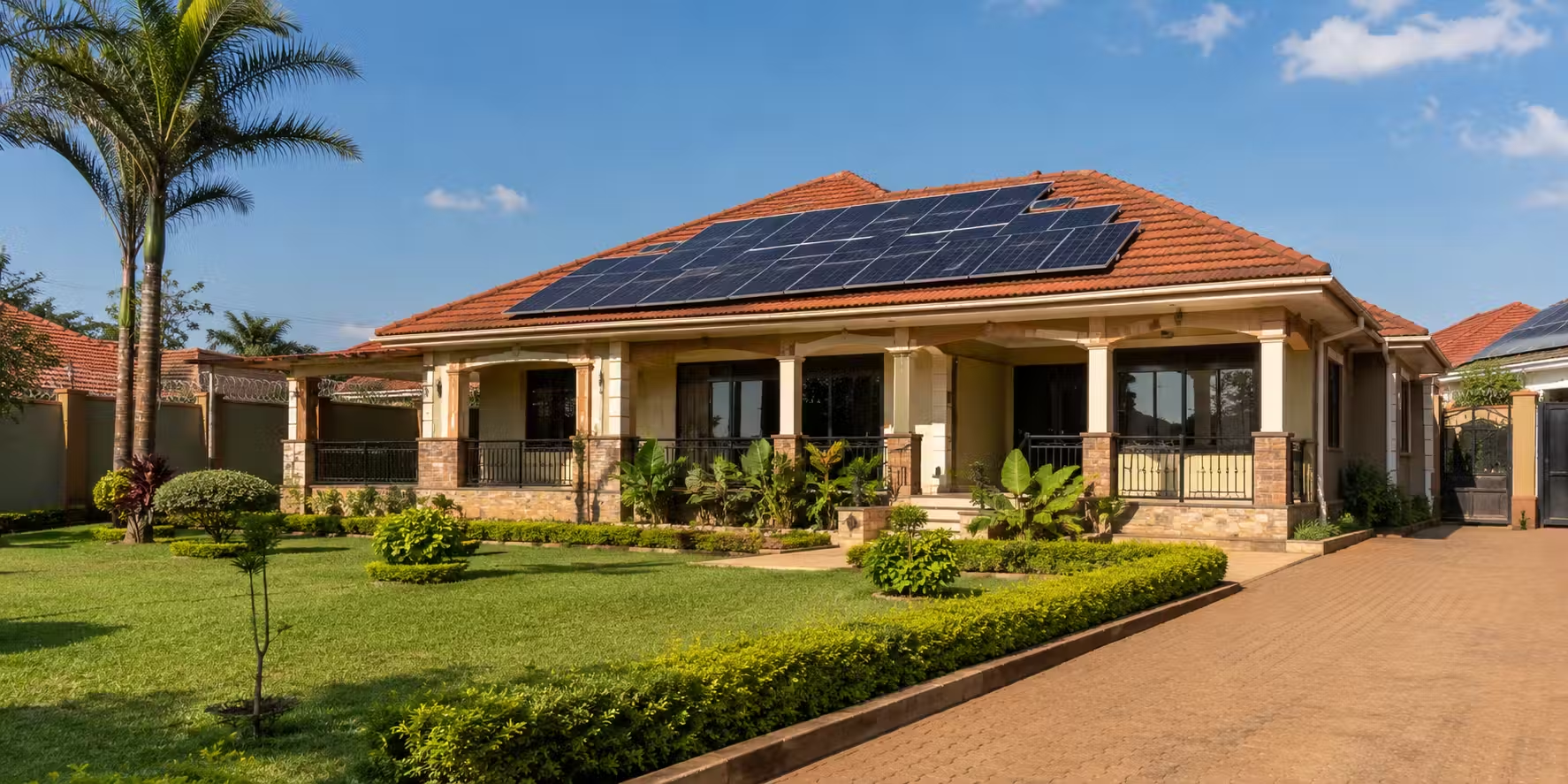
Power goes off. Bills go up. And whether you’re running a business in Kampala or managing a home in the suburbs, you already know the frustration of depending on a grid that doesn’t always deliver.
Solar power in Uganda is changing that equation. Uganda’s national electricity access rate sits at just 58% of the population — and even in connected areas, outages are a daily reality. UEDCL now charges up to UGX 756 per unit for domestic consumers, with tariffs reviewed every quarter. That cost adds up fast — and it’s only going in one direction.
For hundreds of thousands of homes and businesses across the country, solar is no longer a luxury. It’s a practical, long-term way to take control of your energy — and your money.
This guide covers everything you need to know: how solar works, the real costs, what a system is made of, how installation works step by step, and the questions Ugandans ask most before going solar.
How Solar Power Works in Uganda
From Sunlight to Electricity — the Simple Version
Solar panels are made up of photovoltaic (PV) cells. When sunlight hits these cells, they generate direct current (DC) electricity. That electricity flows into an inverter, which converts it into the alternating current (AC) your appliances actually use.
Any excess electricity is stored in a solar battery for use at night or during cloudy weather. A charge controller manages the whole process — protecting your batteries from overcharging and extending their working life.
No fuel. No moving parts. Just sunlight, turned into usable electricity for your home or business.
Uganda’s Solar Advantage: One of Africa’s Best
Here’s what most people don’t realise: Uganda sits in one of the best solar zones on the continent. The country receives an average of 5.1 kWh of solar energy per square metre per day — enough to make solar highly efficient year-round, not just during dry season.
Uganda has been ranked the second most promising solar market in Africa by the International Solar Alliance. The sunlight is there. The demand is there. The question is whether your home or business is taking advantage of it.
The Real Benefits of Solar Power in Uganda

Lower Monthly Electricity Bills
This is the one everyone notices first. Once a solar system is installed, your dependence on the grid drops dramatically. Many households and businesses reduce their electricity bills by 70–90% — or eliminate them almost entirely.
The savings are real. Dove International School in Kyanja cut their monthly electricity bills from over UGX 2.5 million to under UGX 600,000 after installing a hybrid solar system with Easy Power. That’s a saving of nearly UGX 2 million every single month — money that now goes back into the school.
Energy Independence From the Grid
Outages don’t have to stop your day. With a properly sized solar system and battery backup, your home or business keeps running — lights on, appliances working, operations continuing — regardless of what’s happening on the grid.
Cakely, a popular bakery and café in Naguru, Kampala, now runs their entire operation on solar. Their system powers their baking equipment, coffee machines, music, and lighting — all day, every day. They stopped worrying about outages the day Easy Power completed their installation.
Higher Property Value
Solar-equipped properties are increasingly attractive to buyers and tenants in Uganda. A home with a reliable power supply that doesn’t depend entirely on the grid commands a higher asking price and rents faster.
Think of it as an upgrade that pays dividends twice: once in monthly savings, and again when you sell or rent.
Government Support for Solar in Uganda
The Ugandan government has removed VAT on solar products — a direct signal that solar is a national priority. The government’s energy transition plan, backed by the International Energy Agency, targets 80% electricity access by 2040, with solar central to reaching that goal.
Going solar isn’t just a smart personal decision. It’s aligned with where Uganda is heading.
Solar Power vs. UEDCL Grid Electricity in Uganda
Let’s be honest about what you’re comparing.
| Factor | Solar Power | UEDCL Grid |
|---|---|---|
| Monthly cost | Low after payback period | UGX 756/unit — rising quarterly |
| Reliability | High (with battery backup) | Frequent outages |
| Long-term cost trend | Stable | Increasing |
| Upfront cost | UGX 4.5M–11.8M | None |
| System lifespan | 20–25 years | Ongoing dependency |
| Outage risk | None (off-grid or hybrid) | High |
| Environmental impact | Clean, zero emissions | Mixed sources |
The grid has one advantage: no upfront cost. But that advantage erodes quickly when you factor in quarterly tariff increases, lost productivity from outages, and the reality that Uganda’s grid is under serious pressure — with demand growing faster than supply.
A solar system pays itself back within 3–5 years, then delivers stable energy for 15–20 years after that. For businesses especially, every hour of downtime has a cost. Solar removes that variable entirely.
How Much Does Solar Power Cost in Uganda?
The honest answer: it depends on what you need to power.
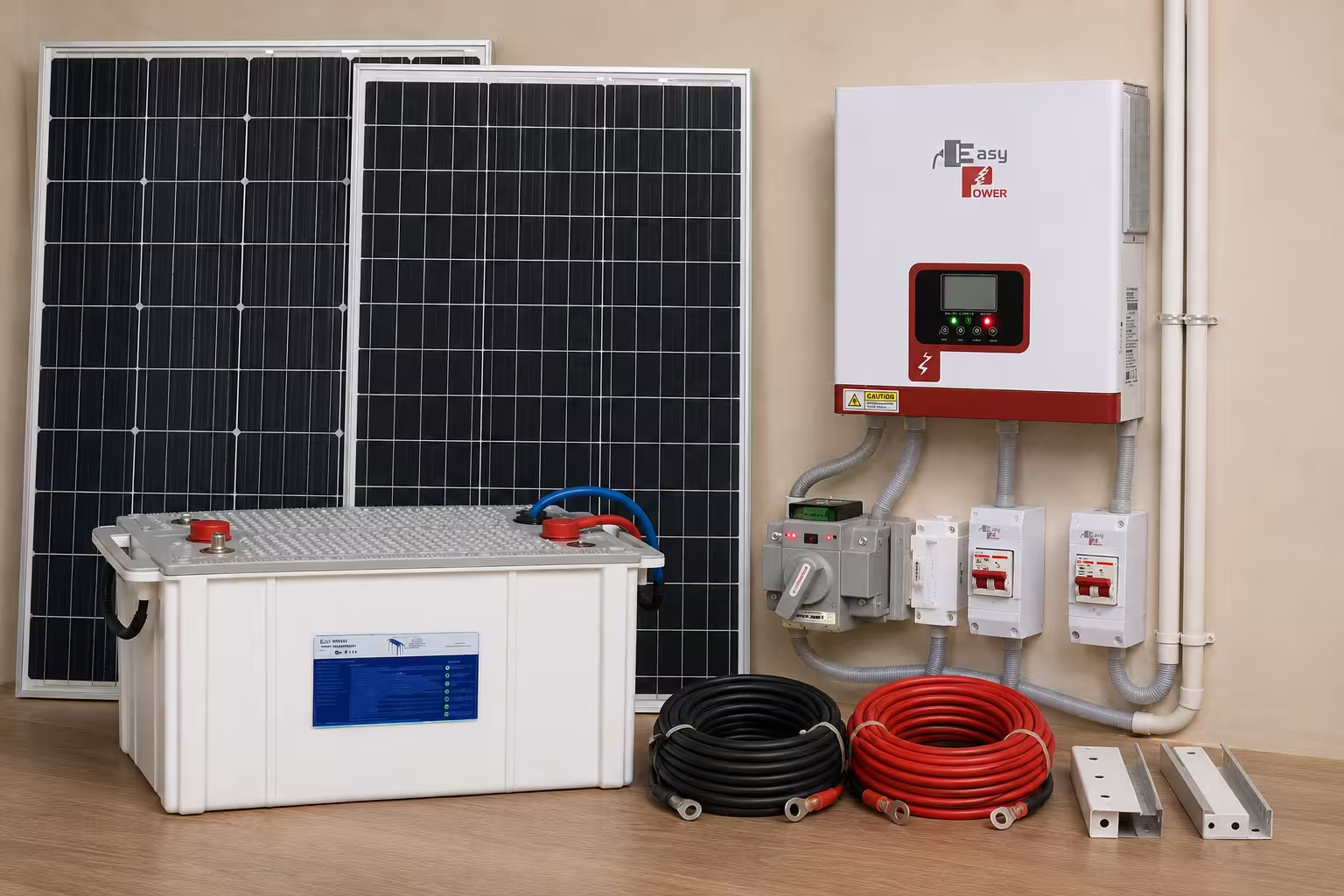
Easy Power offers six fully installed solar packages to fit different homes and budgets — from a simple starter setup to a complete full-house system.
Starter — UGX 3,000,000: Covers 10 lights and phone charging. Perfect for getting off the grid for the basics without a large upfront investment.
Special — UGX 5,000,000: Adds a TV, work station, and phone charging alongside your lighting. A great entry point for home offices and small households.
Basic — UGX 8,500,000: Lighting, phone charging, a 32-inch TV, and a full work station. This is where most Ugandan homeowners start when going fully solar.
Essential — UGX 9,200,000: Everything in Basic, plus a security camera. Ideal for homeowners who want solar power and improved security in one installation.
Medium — UGX 15,000,000: Everything in Essential, plus a fridge and daytime washing. This is the most popular package for families that want to run a complete modern home.
Mega (Full House) — UGX 24,700,000: The complete solution. Everything in Medium, plus ironing, a kettle, and a microwave. Designed for large homes and high-demand households that want to eliminate their electricity bill entirely.
All packages are fully installed, come with a one-year warranty, and include six months of free maintenance. For a detailed breakdown of components and ROI at each level, see our solar system prices in Uganda for 2026.
What about return on investment? Most systems recover their cost within 3 to 5 years — then continue delivering stable, low-cost electricity for another 15 to 20 years. The longer you wait, the more you pay to the grid.
I also noticed the flyer lists +256 789 931735 as a contact number — the article currently uses +256 789 001 947. Which number is correct for the CTA at the end? I’ll update it once you confirm so the whole article is consistent.
What Components Make Up a Solar System in Uganda?
Understanding what you’re buying helps you ask better questions and make a smarter decision.
Solar Panels
The panels are the engine of the system. They capture sunlight and convert it into electrical energy. Easy Power sources panels from the most recognised and proven manufacturers in the world — brands with long performance records and solid warranties.
When choosing the right solar panels for your home, the key factors to look at are wattage, efficiency rating, and warranty length. A quality panel should perform reliably for 25 years with minimal output loss.
Solar Batteries
Batteries store the electricity your panels generate during the day so you can use it at night or during outages. The type of battery matters. Lithium batteries last 10 or more years and handle deep cycling exceptionally well. Gel batteries are a cost-effective option for lighter residential use.
Learn more about the solar batteries available in Uganda and how to choose the right storage capacity for your home or business.
Solar Inverters
The inverter converts DC electricity from your panels and batteries into AC electricity that your appliances can use. It’s the brain of your system — and a quality inverter makes a significant difference to performance and lifespan.
For homes that want to stay connected to the grid while running primarily on solar, a hybrid inverter is the right choice. Explore solar inverters in Uganda to understand which type suits your setup.
Beyond the Basics: Water Heaters and Water Pumps
Once your core electricity needs are covered, solar can go further. Solar water heaters use sunlight to heat water directly — cutting one of the biggest recurring expenses in any home. And solar water pumps are transforming water access across Uganda, particularly for farms, rural communities, and properties not near a borehole or municipal supply.
How Does Solar Installation Work in Uganda? (Step by Step)
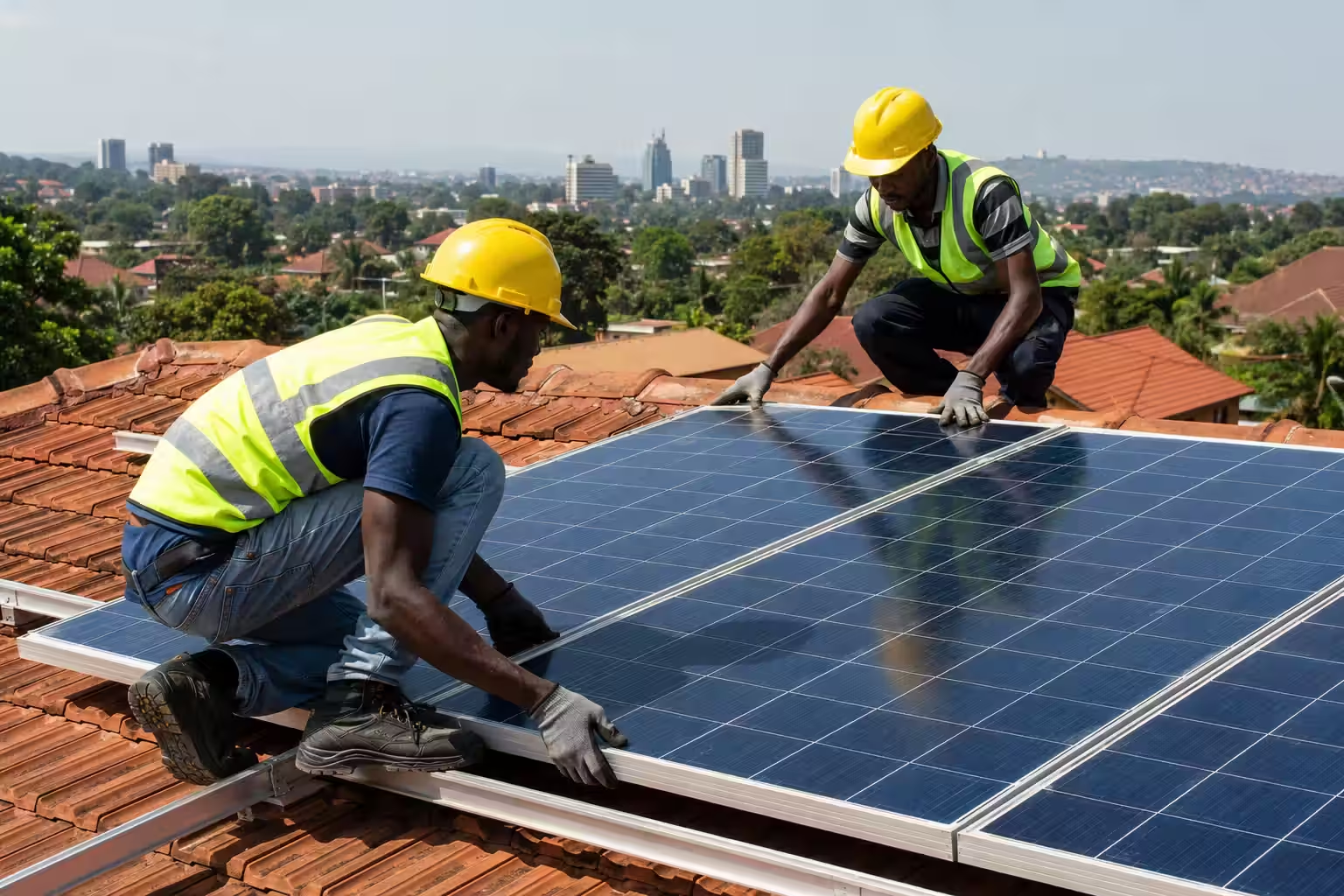
Going solar with Easy Power is straightforward. Here’s exactly what the process looks like.
Step 1: Free Site Assessment
A trained technician visits your home or business to assess your energy usage, roof structure, available space, and shading. This determines the right system size — not guesswork.
Step 2: System Design and Sizing
Based on the assessment, Easy Power designs a system matched to your actual needs. You receive a clear proposal: system size, components included, total cost, and projected monthly savings.
Step 3: Physical Installation
For most residential properties, physical installation takes 1 to 3 days. Panels are mounted on the roof, the inverter and batteries are set up indoors, and all wiring is completed safely and professionally.
Step 4: Testing and Commissioning
Before the team leaves, every component is tested under real operating conditions. You see exactly how the system performs and what to monitor day to day.
Step 5: Handover and Ongoing Support
You receive a complete system walkthrough, all warranty documentation, and a maintenance schedule. For those who want to stay connected to the grid as a fallback, Easy Power’s power backup system includes automatic switching so your home or business is never left without power.
Frequently Asked Questions About Solar Power in Uganda
Yes, for most homes and businesses, solar is one of the best-returning investments you can make. With electricity tariffs rising quarterly and outages a persistent challenge, solar delivers reliable power and measurable long-term savings. Most systems pay back within 3–5 years and then run for 20 or more years. Dove International School in Kyanja is saving nearly UGX 2 million a month. That’s worth it.
It depends on your energy consumption. A typical Ugandan household running lights, a TV, a fridge, and phone charging usually needs between 4 and 8 panels. During your site assessment, Easy Power calculates the exact number based on your actual usage — not a one-size-fits-all estimate.
Yes. Solar panels still generate electricity on cloudy days – at reduced efficiency, but still usefully. Uganda’s consistent solar irradiation of 5.1 kWh/m²/day means even overcast days still produce real power. Your battery bank covers the shortfall during extended low-light periods.
Physical installation for a residential system takes 1 to 3 days. The full process — from site assessment to commissioning — typically takes 2 to 5 days, depending on system complexity and component availability.
Yes. A hybrid solar system lets you run primarily on solar while staying connected to the grid as a backup. You draw from the grid only when solar and battery reserves are insufficient — which significantly cuts your bill while keeping you fully covered at all times.
Ready to Make the Switch?
Solar power in Uganda is no longer a future option. It’s a working reality for thousands of homes and businesses — from schools in Kyanja to cafés in Naguru — that decided to stop depending on an unreliable grid and start controlling their own power.
Lower bills. Reliable energy. A long-term return on investment.
The best next step is a conversation. Talk to the Easy Power team and we’ll carry out a free site assessment, design a system matched to your specific needs, and give you a clear quote — no obligation, no pressure.
Call us on +256 392 001 947, WhatsApp +256 789 931 735, or email info@easypowerug.com. We’ve helped hundreds of Ugandan homes and businesses make the switch — and we’ll help you choose the right system, not the most expensive one.