
Short answer: School security cameras in Uganda deter theft, vandalism and intrusion, provide evidence after an incident, and let staff watch entrances in real time. Install them at every entrance and exit, in hallways, in parking and outdoor areas, outside classrooms, at administrative offices, and in computer and science labs. Never install them in toilets, changing rooms or dormitories. The two objections that decide most board votes are privacy and cost, and both are answerable with a written policy agreed before the first camera goes up.
School security has become a serious concern across Uganda. Schools report theft, vandalism, violent attacks and, in the worst cases, fires set deliberately.
Those incidents put students and staff at risk. They also leave parents anxious about a place their children spend most of their waking hours.
This page covers what school security cameras in Uganda actually do, where to put them, what the honest objections are, and what two Ugandan schools found after installing them. It is written for the person who has to make the decision and defend it to a board or a parents’ meeting.
What school security cameras in Uganda actually do
Five things, and it is worth being precise about them, because a camera does some of these well and others barely at all.
They deter
This is the biggest single effect. Someone planning to take a laptop from a computer lab behaves differently when a camera is visible above the door. Deterrence only works when the cameras can be seen, which is an argument against hiding them.
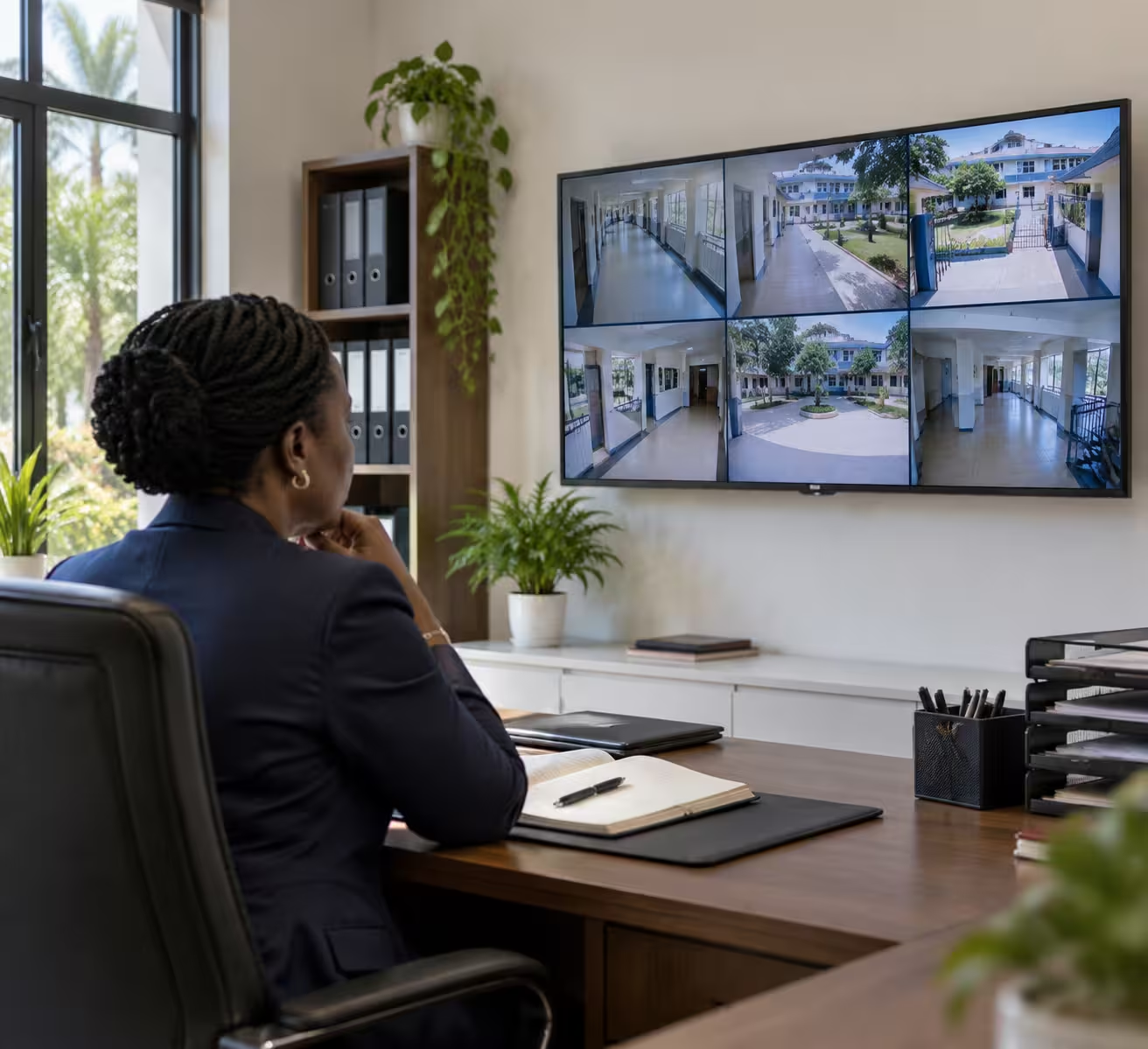
They let you watch in real time
Useful on ordinary days and essential on busy ones. Sports days, assemblies, visiting days and examinations put hundreds of extra people on the compound at once. Real-time monitoring means one person can watch four gates without walking between them.
They produce evidence
After an incident, footage establishes who was present and in what order things happened. That matters for a disciplinary hearing inside the school and for the Police if the matter goes further.
They catch hazards, not just people
An underrated benefit. Cameras show blocked fire exits, overcrowded corridors and doors propped open that should be shut. Those are the conditions that turn an incident into a disaster.
They reassure parents
Parents choosing between schools ask about security. Being able to answer the question concretely is worth something at enrolment, quite apart from the safety itself.
Where to install school security cameras

Placement decides whether the system works. A school with twelve cameras in the right places is safer than one with thirty in the wrong ones.
| Where | What it protects |
|---|---|
| Every entrance and exit | Main gate, side gates and emergency exits. This is where unauthorised people enter and where stolen property leaves. |
| Hallways and common areas | High traffic routes. Most bullying and most vandalism happen where students gather without an adult present. |
| Parking and outdoor areas | Vehicles, perimeter fencing and the quiet corners of a compound after dark. |
| Classroom entrances | Who goes in and when. Outside the door, not inside the room. |
| Administrative offices | Where records, money and examination materials are kept. |
| Computer and science labs, library | The highest value equipment in most Ugandan schools sits in these three rooms. |
| Playgrounds and corridors | Where bullying is reported most often, and where a camera settles disputed accounts of what happened. |
Where never to install them: toilets, bathrooms, changing rooms, and dormitory areas where students undress. There is no security argument strong enough to justify it, and a single camera in one of these places will cost you the trust of every parent in the school.
Schools without reliable mains power should look at solar cameras, which run independently of the grid, or pair the system with a power backup system. A camera that switches off during a load-shedding window is watching nothing at exactly the time you need it most.
The case against school security cameras
Any honest guide has to make this argument properly, because a board that has not heard it will hear it later from a parent.
Privacy
Students and staff may feel uncomfortable being watched all day. That discomfort is legitimate and it does not go away because the intention is good. The answer is not to dismiss it. It is to define exactly where cameras are and are not, publish that, and stick to it.
Cost
A full system is a real investment. The price covers cameras, cabling and installation, a recorder, storage, and ongoing maintenance. For a school working from a tight budget, that money is competing with textbooks and teacher salaries, and pretending otherwise helps nobody.
Misuse
Footage in the wrong hands is its own risk. Unauthorised access to live feeds, recordings shared outside the school, or a system used to settle personal scores are all failures of policy rather than technology. Decide who can view footage before you install anything.
Trust
Too much surveillance changes the atmosphere of a school. Students who feel watched constantly behave differently, and not always better. A camera in every corridor signals suspicion, and teenagers read that signal accurately.
None of these is a reason not to install cameras. Each is a reason to install them deliberately, with the rules written down first.
What two Ugandan schools found
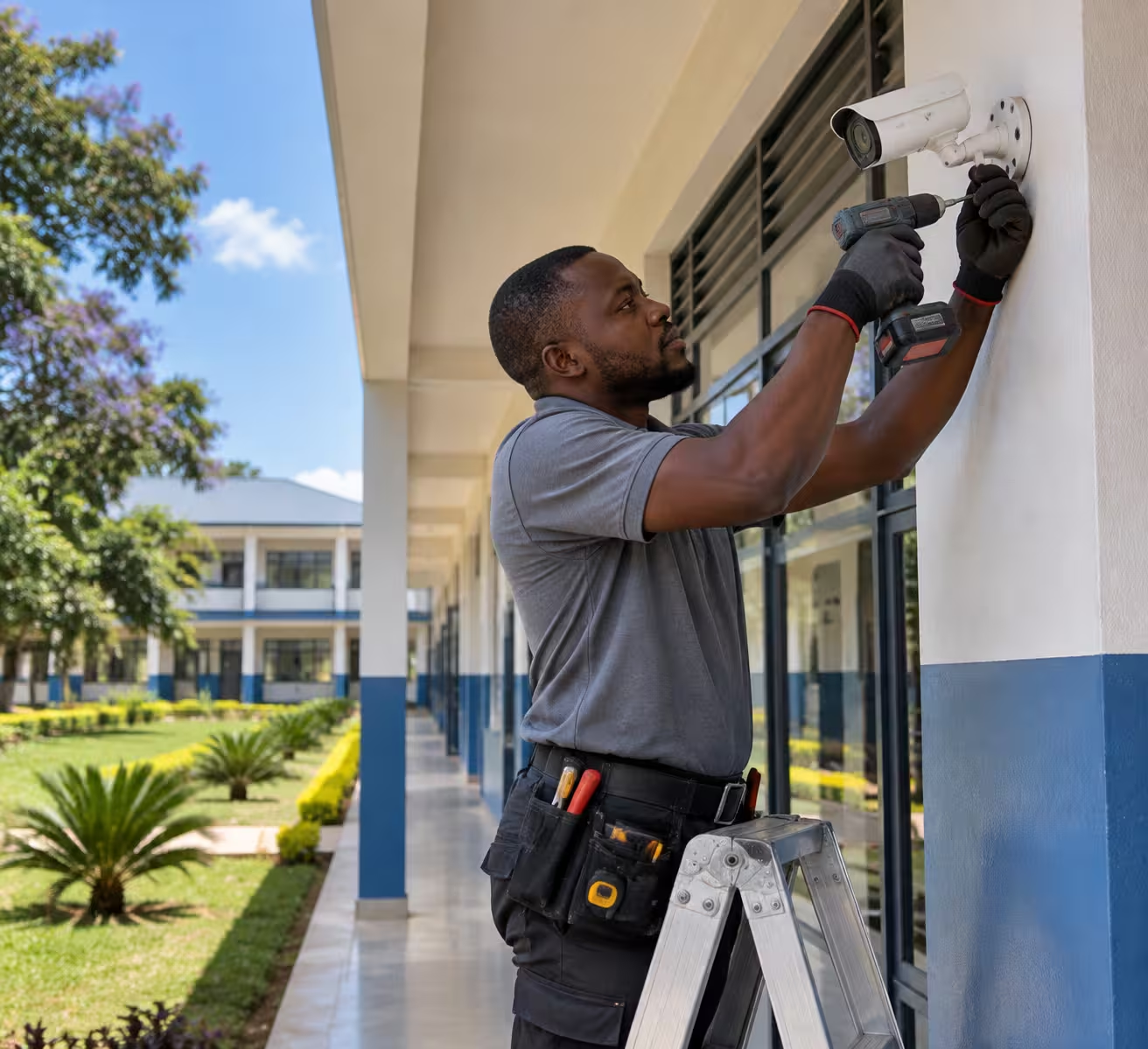
Kako Secondary School, Masaka. The school installed a comprehensive camera system and saw a significant fall in vandalism and theft. The cameras worked mainly as a deterrent, and staff and parents reported feeling more secure on the compound.
Dove Education Centre, Kampala. This one is more interesting, because the problem was not theft. The school had ongoing bullying and student conflicts, and disputes about what had actually happened. Camera footage let administrators establish the facts and act on them. What mattered as much as the cameras was how the school handled it. Open communication about where the cameras were and why they were there rebuilt trust rather than damaging it.
The second case is the lesson worth taking. The technology settled the incidents. The communication settled the relationships.
The policy you need before the first camera goes up
Four things, and all four should exist in writing before installation day.
A written policy. State what the cameras are for, who may view footage, how long recordings are kept, and where cameras are and are not installed. Share it with students, staff, parents and the school board.
Transparency. Tell people the cameras are there. Sign the areas that are covered. A school that announces its cameras gets the deterrent effect; a school that hides them gets the suspicion without it.
Training. Whoever has access to the system needs to understand what they may do with it and what they may not. This is a short conversation that prevents a long problem.
Maintenance. Budget for it from the start. Cameras drift out of focus, lenses get dusty, hard drives fill up and power supplies fail. A system nobody has checked in a year is usually a system that has not been recording for months.
Uganda’s Ministry of Education and Sports sets the wider framework schools operate under, and your own board or foundation body may have requirements of its own. Check both before you commit.
Frequently asked questions
Do school security cameras actually reduce crime?
They reduce opportunistic crime, which is most of what schools face. Visible cameras deter theft, vandalism and unauthorised entry because the person considering it expects to be identified. They do less to prevent a determined or violent intruder, which is why cameras sit alongside gates, guards and access control rather than replacing them.
How much do school security cameras cost in Uganda?
It depends on the size of the compound, how many cameras you need, whether cabling can be run easily, and how long you want footage kept. A small primary school covering gates and a computer lab is a very different job from a boarding secondary school with dormitories and multiple blocks. Ask for a site visit and a written quote rather than a price over the phone.
Where should cameras never be installed in a school?
Toilets, bathrooms, changing rooms and any dormitory area where students undress. These are absolute. Installing a camera in one of these locations destroys parental trust and exposes the school to a complaint it cannot defend, whatever the security justification.
Can security cameras invade student privacy?
They can, if nobody sets limits. The way to prevent it is a written policy that names the covered areas, restricts who can view footage, sets a retention period after which recordings are deleted, and is shared openly with students, staff and parents before installation.
Do school cameras help with bullying?
Yes, in two ways. They discourage it in the corridors and playgrounds where it usually happens, and they establish what actually occurred when accounts differ. Dove Education Centre in Kampala used footage to resolve exactly this kind of dispute. Cameras support a discipline policy, they do not replace one.
Will cameras work if our school has power cuts?
Not unless you plan for it. A mains-powered system stops recording the moment the power does. Schools with unreliable supply should use solar cameras or connect the system to a battery backup, so that a load-shedding window does not become a blind spot.
How many cameras does a school need?
Fewer than most people expect, if they are placed well. Start with every entrance and exit, then the highest value rooms, then the busiest corridors. A school with twelve well-placed cameras is better protected than one with thirty pointed at empty ground.
Who can install school security cameras in Uganda?
Easy Power Company Limited has been installing security and power systems in Uganda for over 15 years, from our offices in Kampala. We survey the compound, recommend placement, install the system and maintain it afterwards.
Talk to us about your school
Tell us the size of your compound, how many blocks you have, and whether you have reliable mains power. We will visit, recommend where the cameras should go, and send a written quote.
Easy Power Company Limited, Prime Building, Plot 1260, 2nd Floor, Suite 23, Kisasi-Kyanja Road, Kampala. Email info@easypowerug.com.
Related reading: CCTV cameras in Uganda, biometric access control for gates and offices, and home security cameras.
Written by the team at Easy Power Company Limited, Kampala, who have installed security and power systems across Uganda for more than 15 years. Last reviewed .